Quick Answer
What this page helps you do
Forecast inflows, outflows, and future cash position so you can plan ahead with more confidence than a spreadsheet alone.
Use This Page To
- Estimate results for cash flow plan calculator.
- Compare scenarios by changing your assumptions and inputs.
- Use the output as a starting point before making a real financial decision.
Best For
- People comparing major financial decisions.
- Anyone who wants a fast estimate before talking to a lender, advisor, or tax professional.
- Readers who want a simple explanation alongside the calculator or guide.
Cash Flow Plan Calculator: Forecast Future Cash Position With More Confidence
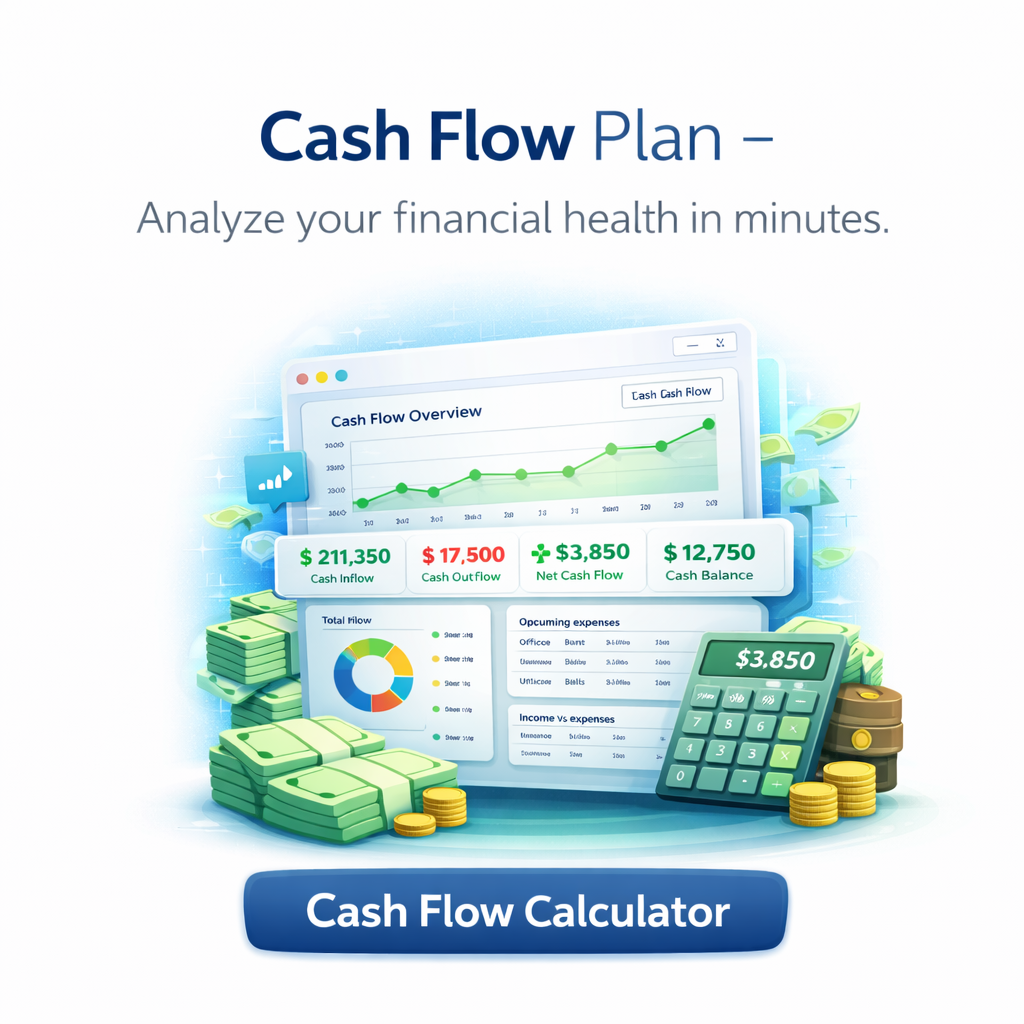
This tool helps you project cash coming in, cash going out, and the balance left over across future periods. It is built to answer an operational question that spreadsheets often handle poorly: will you have enough cash available when upcoming obligations actually hit?
What This Cash Flow Tool Helps You Estimate
Use it to model:
- expected inflows and outflows
- projected ending cash balance
- timing gaps between receipts and payments
- the impact of best-case and worst-case scenarios
- short-term liquidity pressure before it becomes a problem
That makes it useful for business owners, operators, and finance teams who need visibility, not just historical reporting.
Why Cash Flow Planning Matters
Profit and cash are not the same thing. A business can look healthy on paper while still running into timing problems if incoming cash arrives after payroll, vendor payments, debt service, or tax obligations are due.
Forward-looking cash flow planning helps you spot those timing risks early enough to respond.
Why Teams Move Beyond Spreadsheets
Spreadsheets can work for lightweight planning, but they often become fragile as the process grows. Common problems include:
- broken formulas
- multiple versions of the same file
- limited scenario planning
- manual data entry risk
- weak visibility into upcoming liquidity
The goal of this tool is to give you a more structured view of cash movement without relying on a fragile workbook.
Frequently Asked Questions
Is this just another budgeting tool?
Not exactly. Budgets focus on planned spending and targets. Cash flow planning focuses on timing and liquidity, including when money actually arrives and leaves.
Who should use a cash flow planner?
It is especially useful for businesses with variable revenue, seasonal swings, uneven payment timing, or multiple stakeholders making spending decisions.
Why not just use Excel?
You can, but spreadsheet workflows become harder to trust as complexity grows. A dedicated tool is often easier to maintain and interpret over time.
Related Tools
- Budget Planner for personal monthly budgeting
- Loan & Debt Planner if cash flow pressure is tied to debt obligations
- Net Worth Tracker to measure longer-term financial progress beyond short-term liquidity
Important to know
Disclaimer: This tool provides planning estimates for informational and educational purposes only. Results depend on the quality of the inputs you provide and do not replace accounting records, financial controls, or professional advice.